To fetch an audio file that you wish to play to a caller, use an HTTP request as configured here:

To fetch an audio file that you wish to play to a caller, use an HTTP request as configured here:
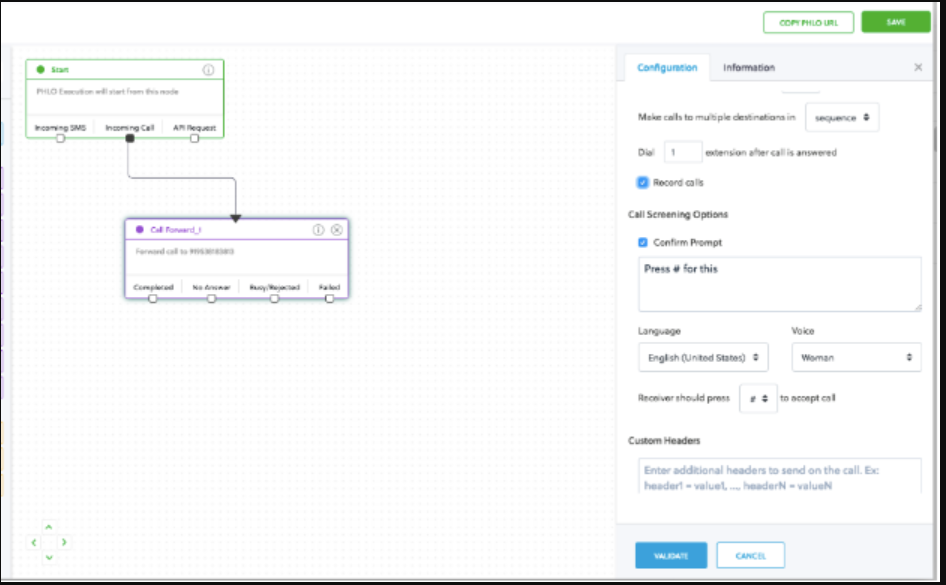
Set up call whisper by checking Confirm Prompt under the call screening options in the call forwarding node, then enter the text you wish to be played to the caller and define the digit that is to be pressed to bridge the call.
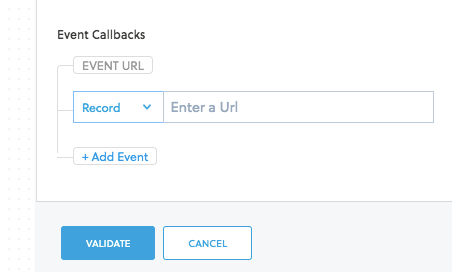
In the Configuration window of a component, in the Event Callbacks section, select the event Record and define a URL to receive recordings to your web server. Recording is available for the following components:
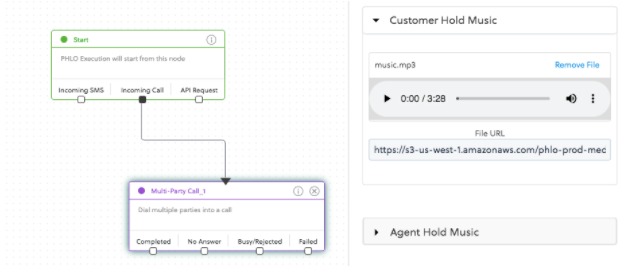
Custom dial music is available only with the Multi-party call component in PHLO. Follow these steps to set up custom dial music when an incoming call is forwarded:
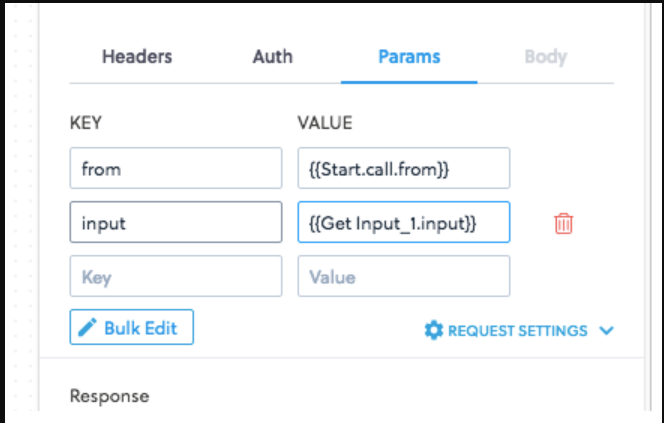
In the HTTP request component, in the Configuration pane, the strings defined in the key section and their corresponding values are posted to the web server. In this screenshot, the parameters “from” and “input” will be posted along with the values of the caller ID of the caller and the digit entered by the caller once the call was connected.
We don't have the option to redirect calls from one PHLO application to another directly. However, you can achieve this outcome if you forward calls from the first PHLO to another Plivo phone number that has a second PHLO attached to it.
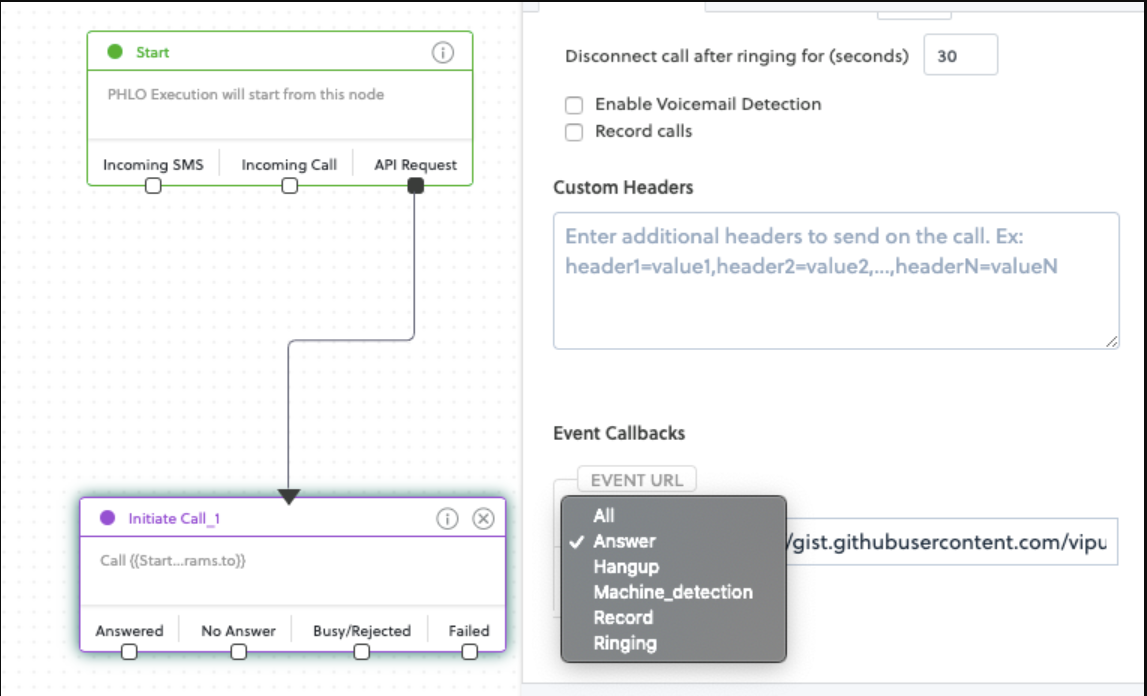
You can define a URL in the Event Callbacks section of the Configuration pane for event categories such as answer, connected, digits, hangup, and record. The details of these events are posted to the respective URLs. Each component has its own set of events that are defined.
You can transfer a call to another destination number or SIP endpoint if the call is being handled by the multi-party call component, which allows for warm and cold transfers of a call and extends contact center features on PHLO.
You can manage call transfers and states of members in a multi-party call using member objects. A member is created when a user joins a multi-party call.
Warm transfer: A user (U1) can transfer a call with a member (U2) of the multi-party call to another user (U3). The user who initiates the transfer (U1) and the user to whom the call is transferred (U3) can speak privately before U2 is added to the call. For more information, refer to the API documentation.
Cold transfer: A user (U1) can transfer the call with a member (U2) of the multi-party call to another user (U3). User U2 is connected directly to the user to whom the call is transferred (U3) and the user initiating the cold transfer (U1) is disconnected from the call. For more information, refer to the API documentation.
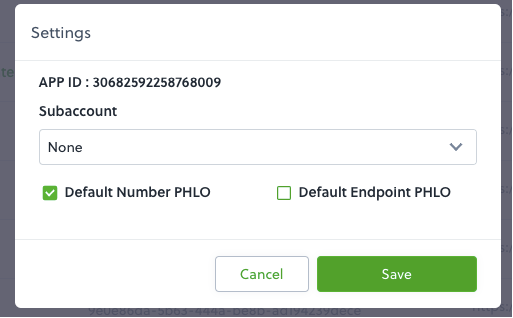
Open the PHLO list and find the PHLO application that you wish to make the default application. Click on the kebab menu at the right, then Settings.
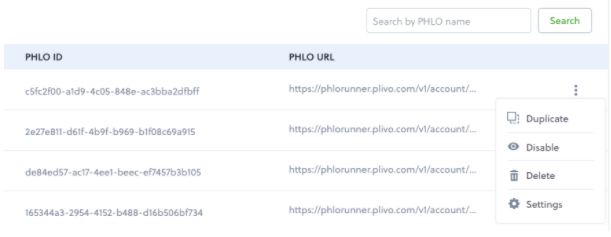
Select the checkbox to make the application the Default Number PHLO or Default Endpoint PHLO, or both, based on your requirements. Finally, click Save.